
Pool interior
Plaster, quartz, pebble, aggregate
Grunit Materials Guide
A field guide to choosing the surfaces you see, touch and live with—before a single finish is ordered.
↓ Begin the guideChapter 02 /
Material thinking
Color matters. So do heat, wet feel, edge shape, glare, joints, sealing, salt exposure and replacement access. Handle real samples in sun and water before the final choice.
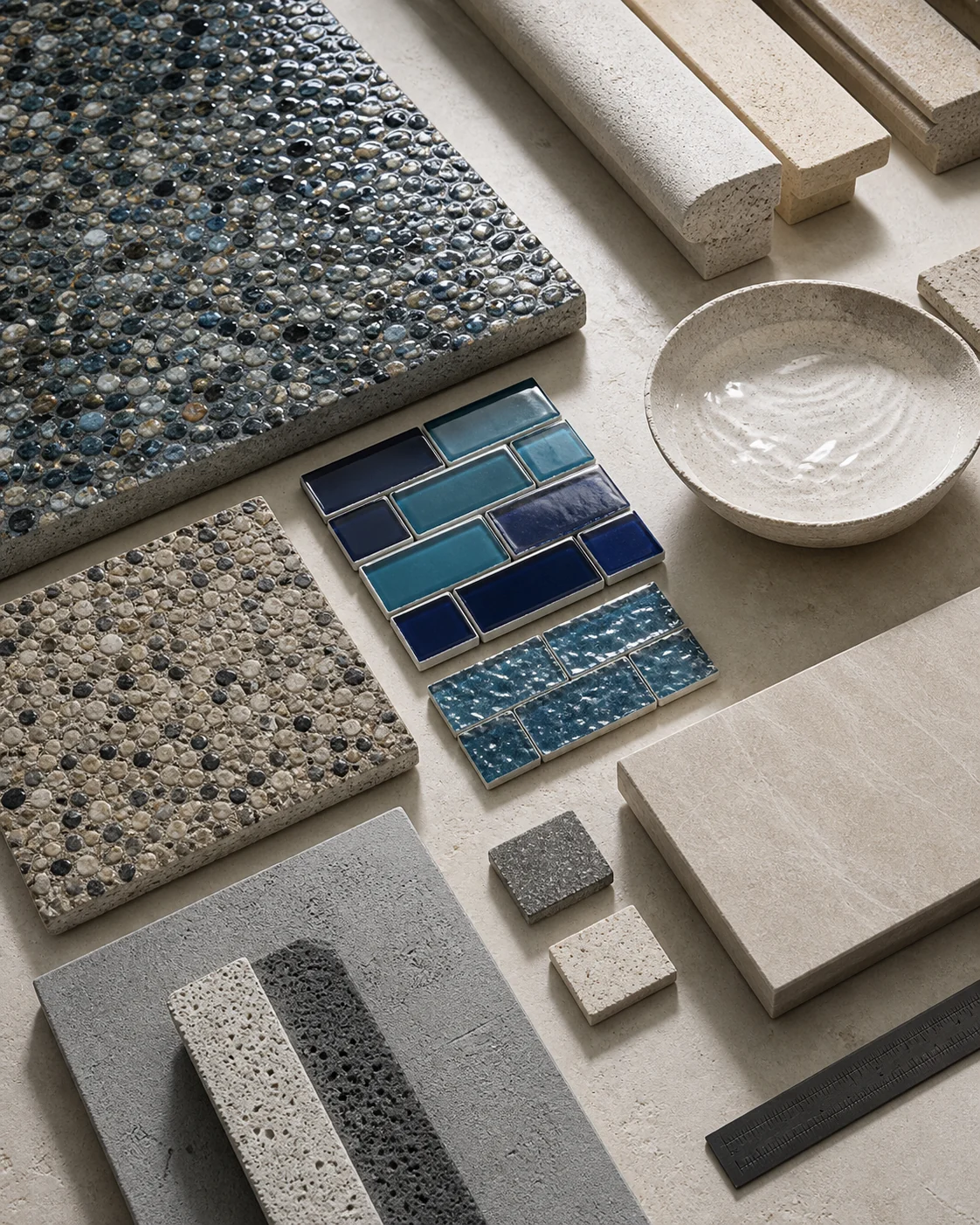
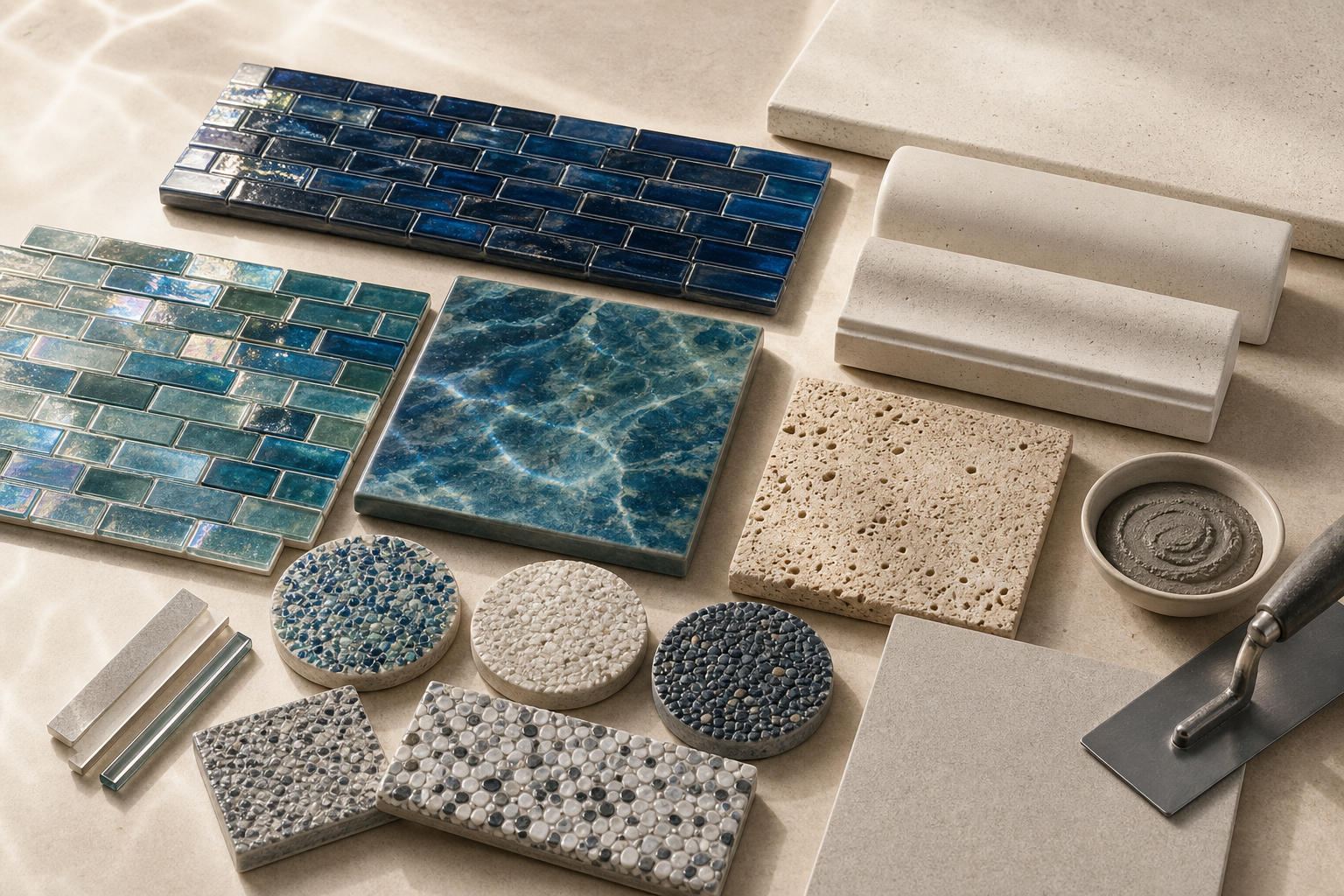
Plaster, quartz, pebble, aggregate
Glass, porcelain, ceramic, stone, mosaic
Travertine, limestone, marble, porcelain, concrete
Pavers, porcelain, concrete, stone, wood-look tile
The exploration distinguishes glass mosaics, porcelain tile and mosaics, natural-stone paving and coping, 2 cm porcelain hardscapes, and interior finishes from micro pebble through polished quartz.
The material equation
Five readings. One material decision. Test every sample in the conditions where it will live.
What happens to the tone in full sun, shade and moving water?
Compare sun / shade / submergedCan bare feet cross it comfortably at three in the afternoon?
Test outdoors / 2–4 PMDoes it feel refined, reassuring and right for the way you live?
Hand / foot / seated edgeHow do grip, glare and color change once the surface is saturated?
Wet first / then decideWill its natural aging feel like patina—or like upkeep?
Daily life / year five / repair accessWaterline + interior
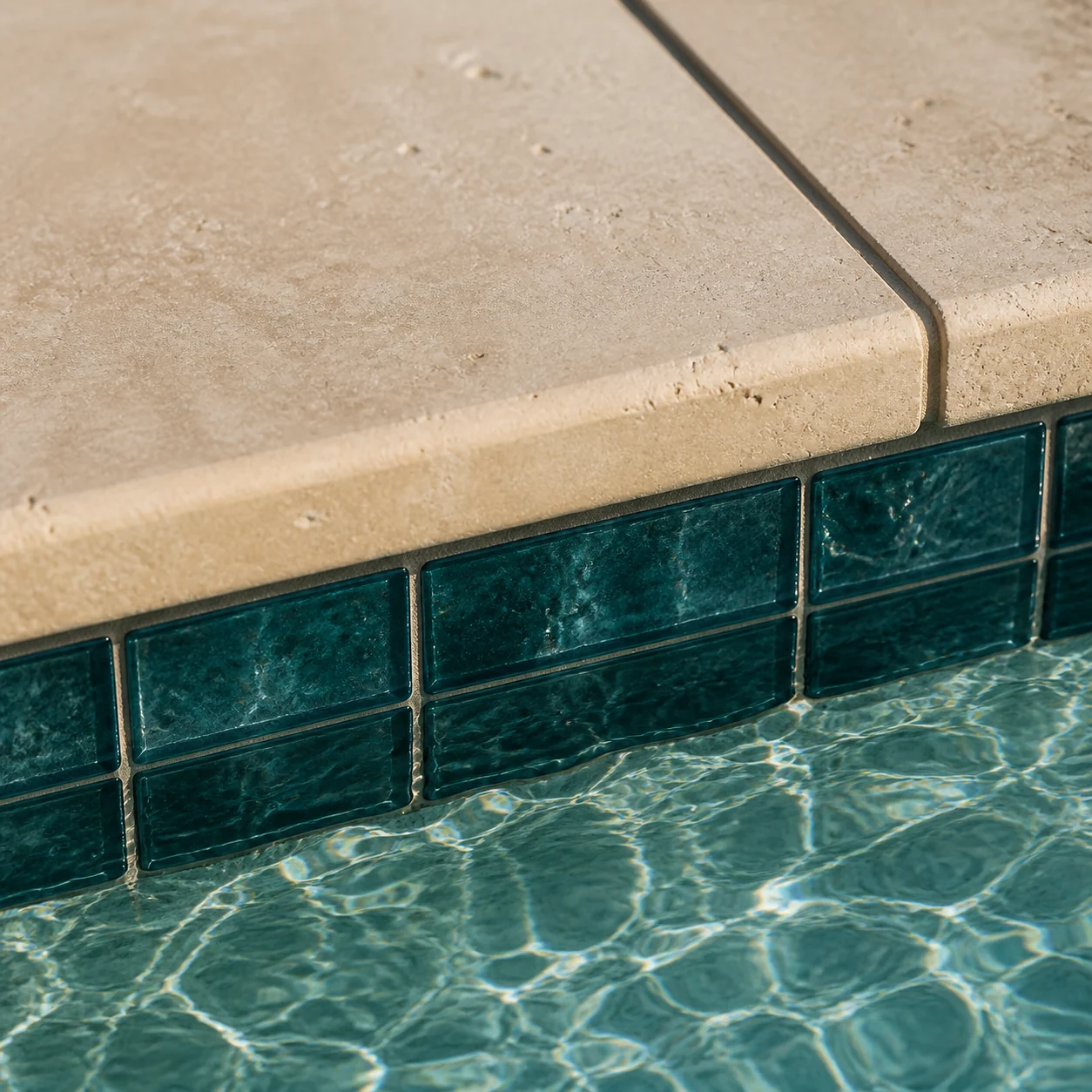
Tile draws the line. The interior creates the color below it. Treat them as a single composition, reviewed wet and at scale.

Material study 01
Water deepens color, softens contrast and reveals the true relationship between aggregate, tile and grout.
 Saturated sample / moving water
Chapter 03A /
Finish library
Move from the detail to the completed environment. Every plate pairs the material at hand scale with the way it changes water, architecture and atmosphere.
The waterline is a small surface with outsized visual impact. Scale, sheen and grout determine whether it reads as a quiet band or a defining feature.
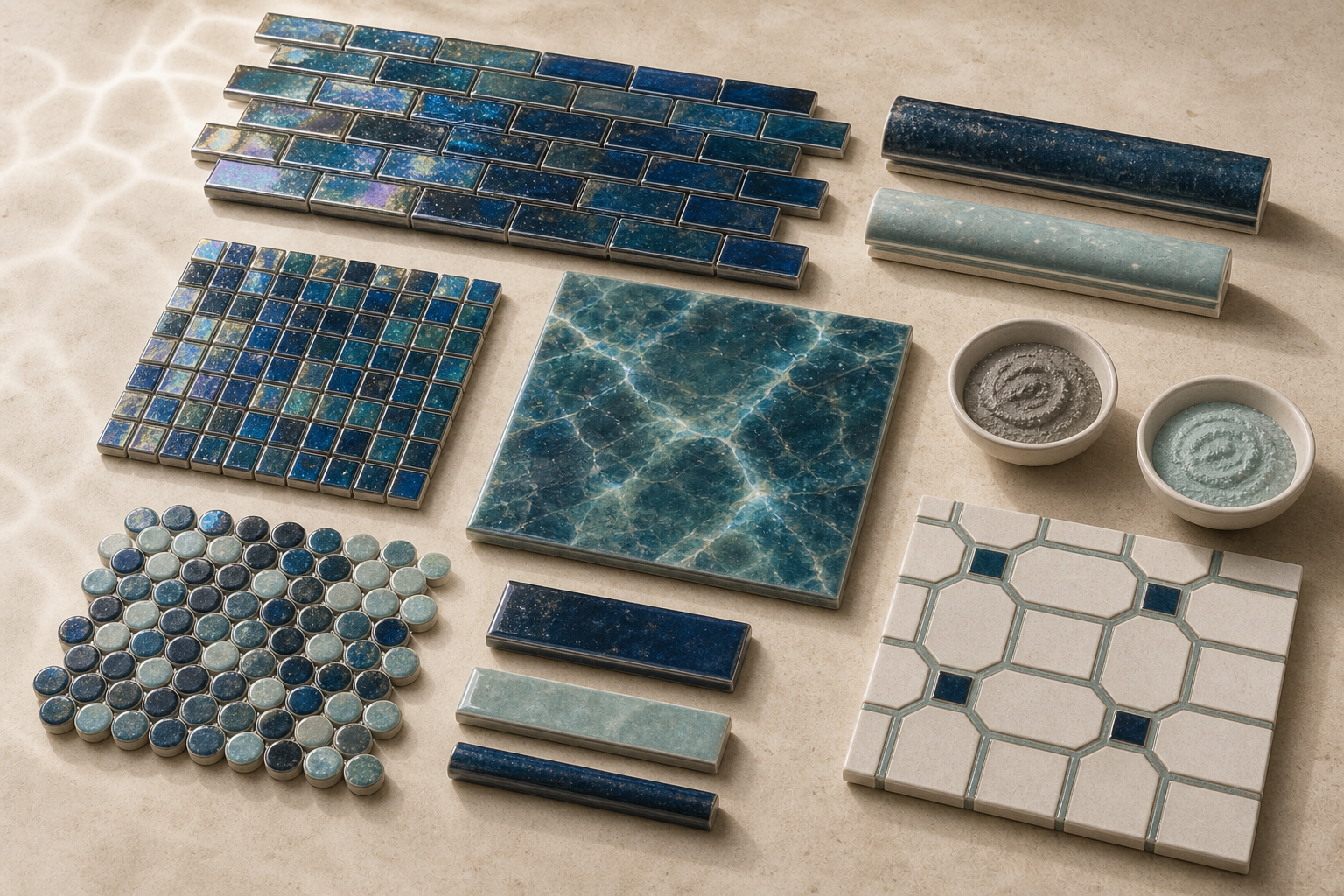
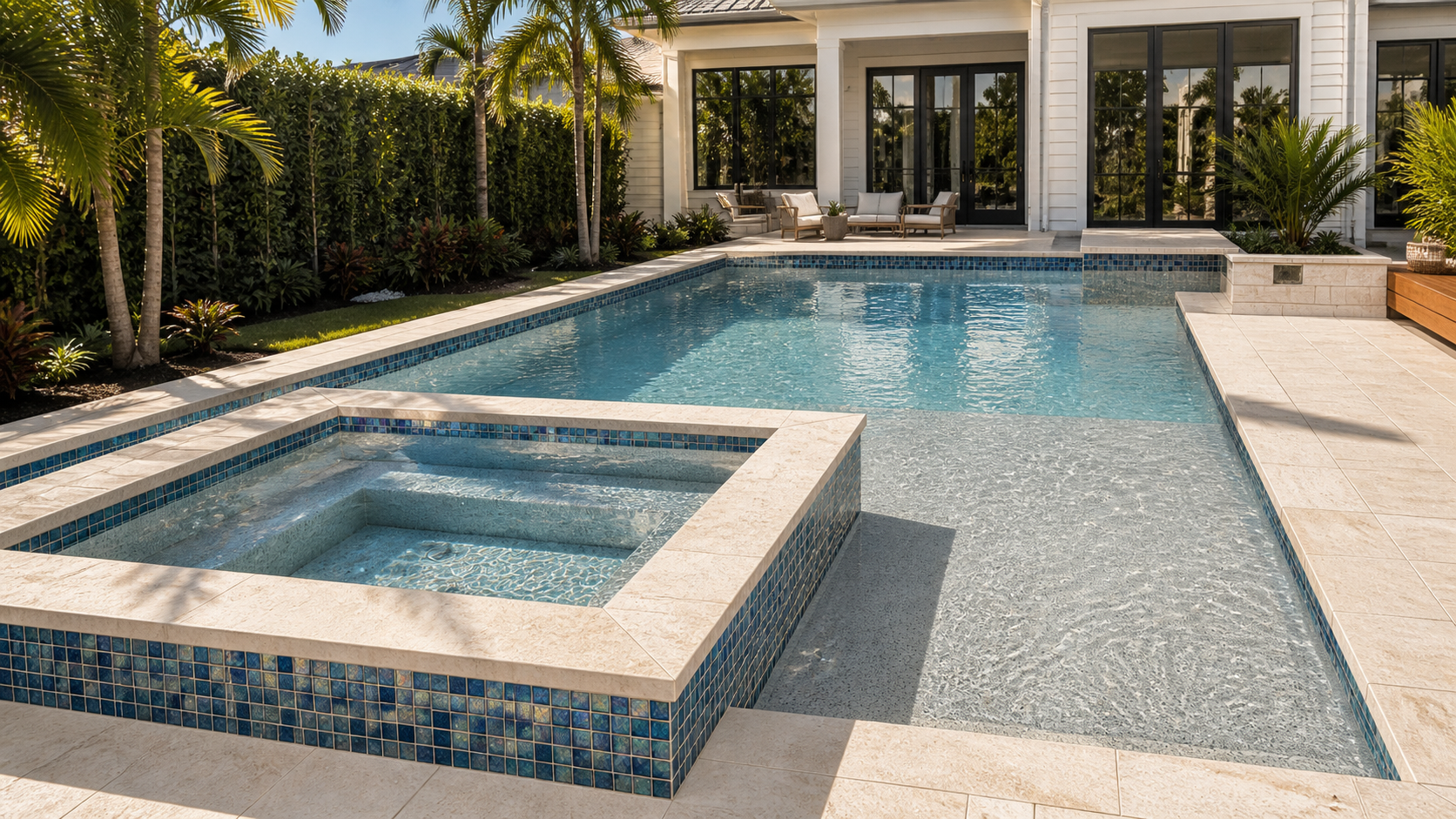
Luminous depth · expressive color · visible mineral deposits
Controlled tone · precise modules · low absorption
Classic character · broad glaze range · pool-rated selections
Contrast, grid and long-term appearance are decided here
The interior finish is the color engine of the pool. Aggregate size, base color, depth and sunlight decide what the water ultimately becomes.
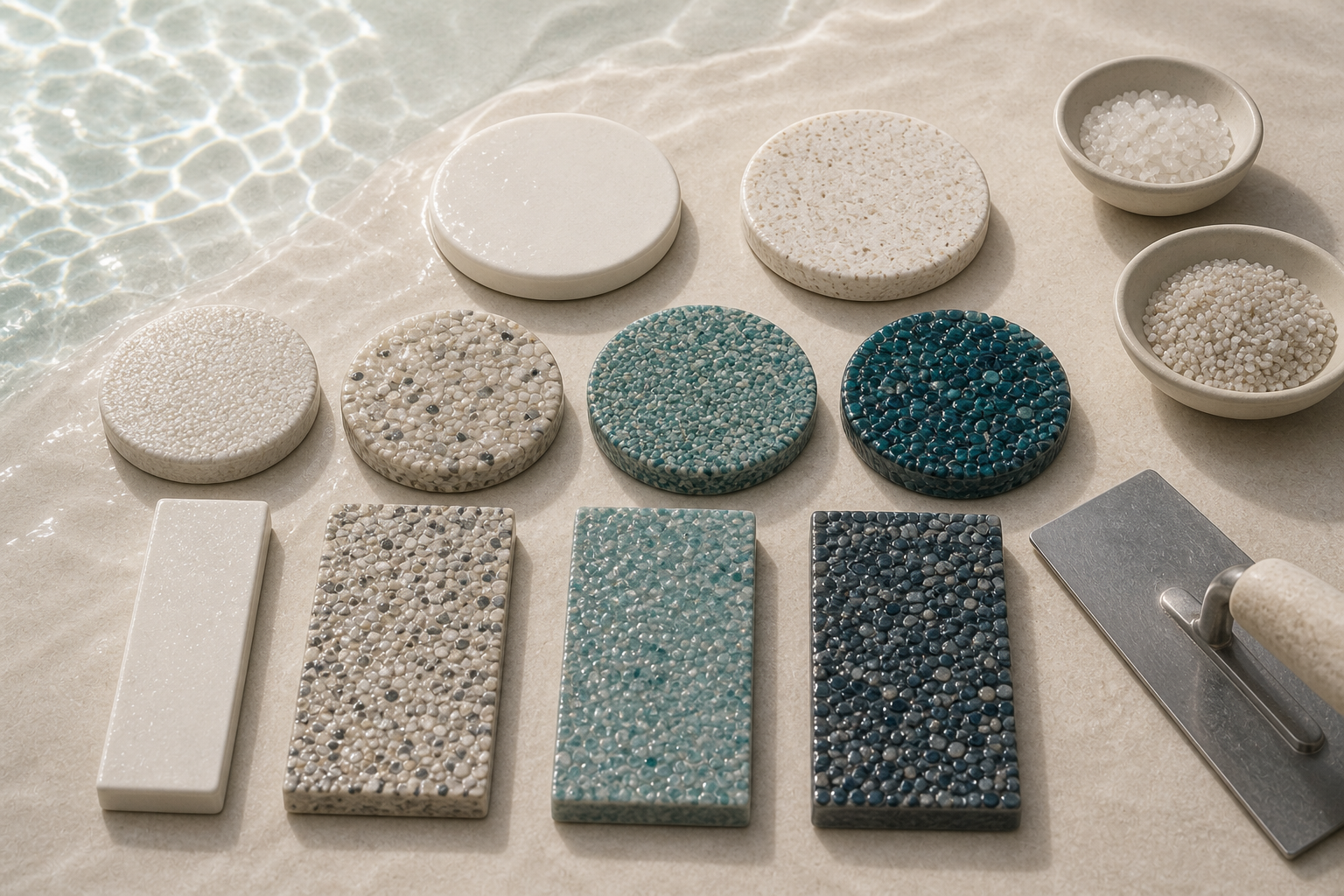
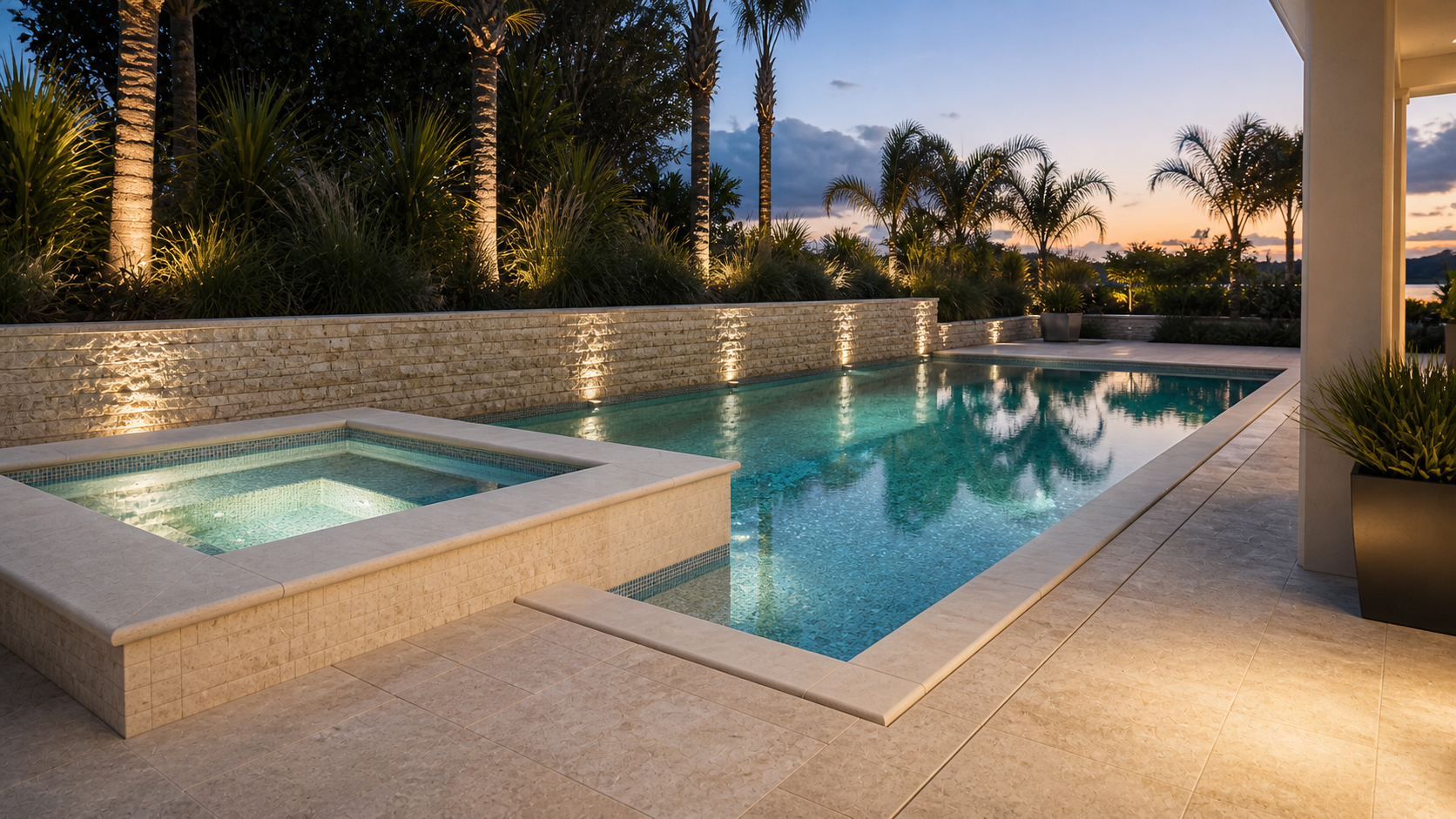
Smoothest feel · classic color · chemistry-sensitive
Fine texture · color consistency · refined sparkle
Natural depth · tactile feel · organic variation
Dense color · smoother exposure · elevated finish
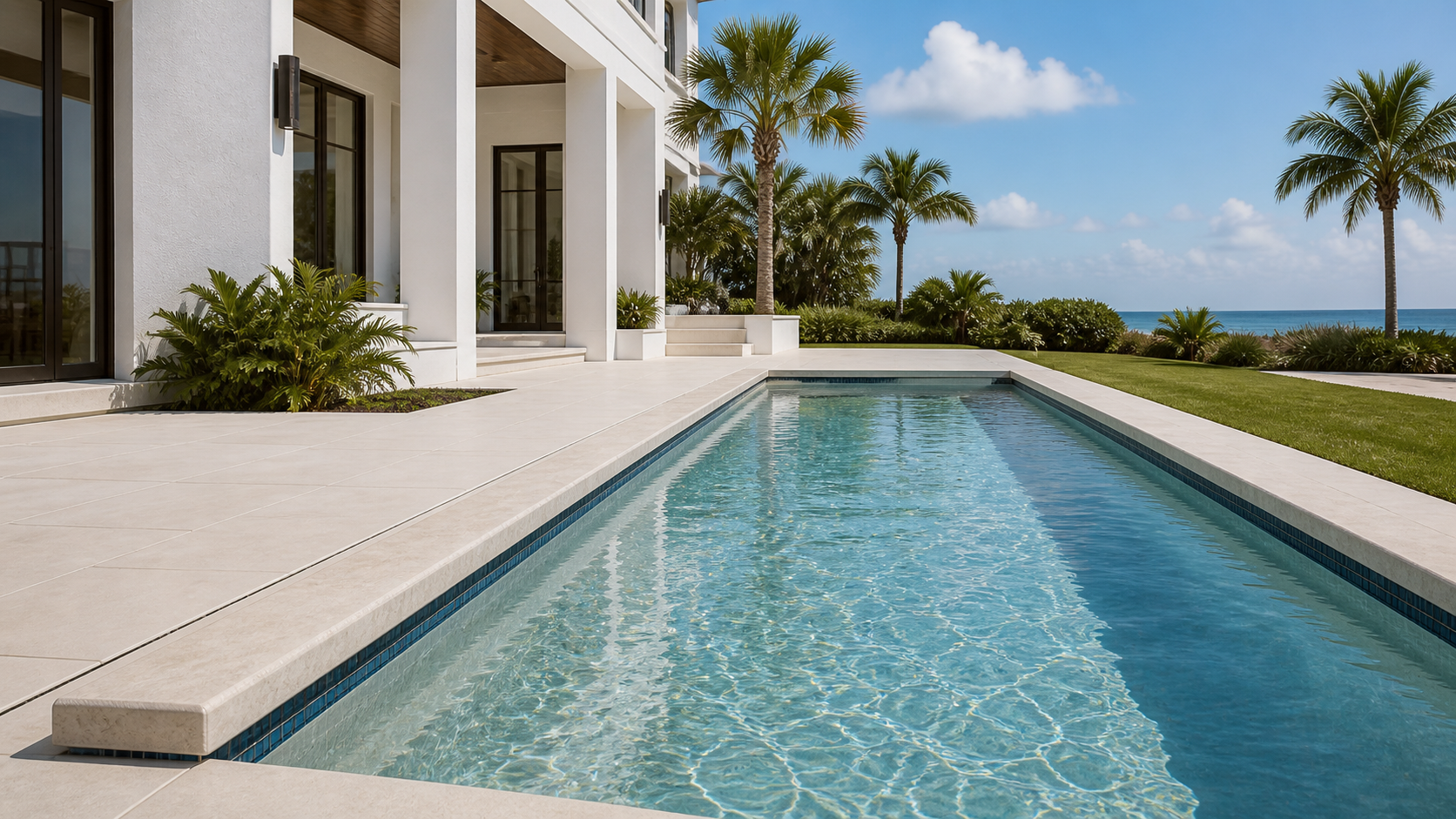
The broadest material field must balance visual calm with heat, traction, comfort and care. Always test the exact color in direct afternoon sun.
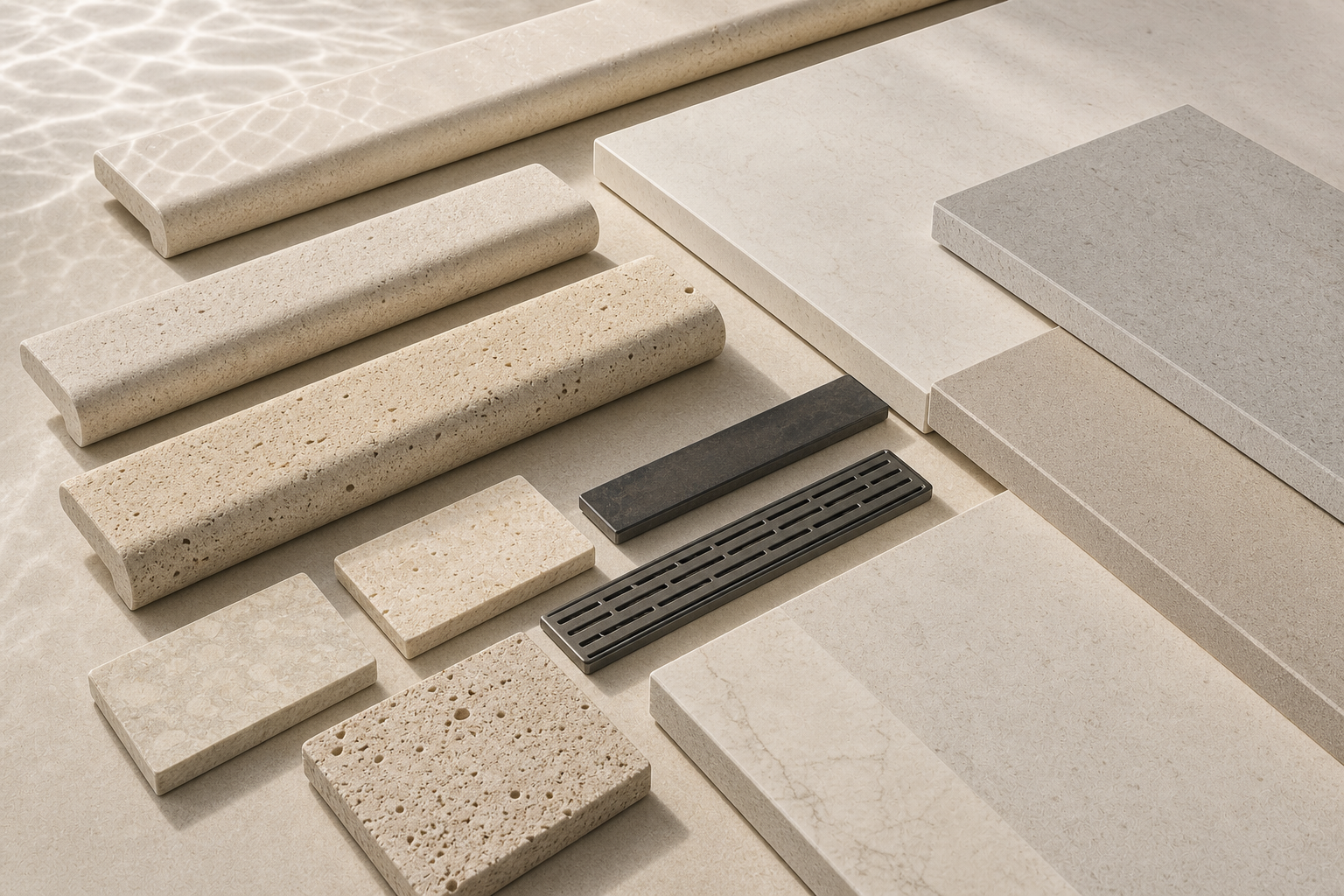
Quiet movement · refined feel · thoughtful sealing
Soft tumbled edge · warm range · natural voids
Fine veining · elevated presence · attentive care
Controlled variation · low absorption · precise install
Coping + transitions
The edge is the most touched detail in the pool. Its radius, overhang, joint and finish should be designed as one assembly.
Exploded edge study / not to scale
A softened or eased edge is more comfortable for hands, seats and entries.
Joint placement should align across coping, tile, deck and architectural sight lines.
Overhang, drip edge and cap details determine how water marks the surface over time.
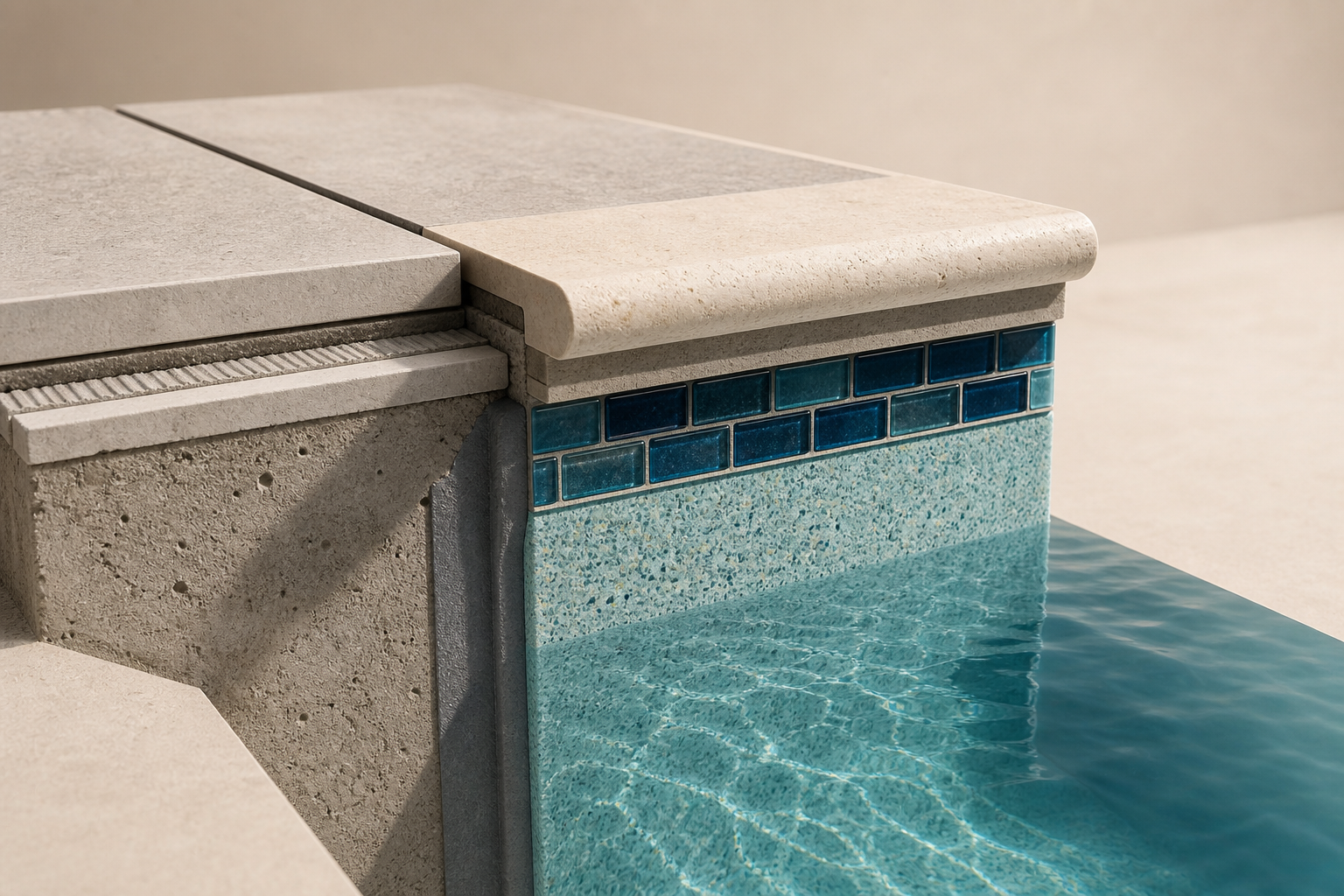
Review edge radius, overhang, grout, waterline alignment and the first deck joint together.
Decking + natural stone
Decking establishes the visual calm of the backyard. Compare real samples outside—especially for heat, glare and wet traction.
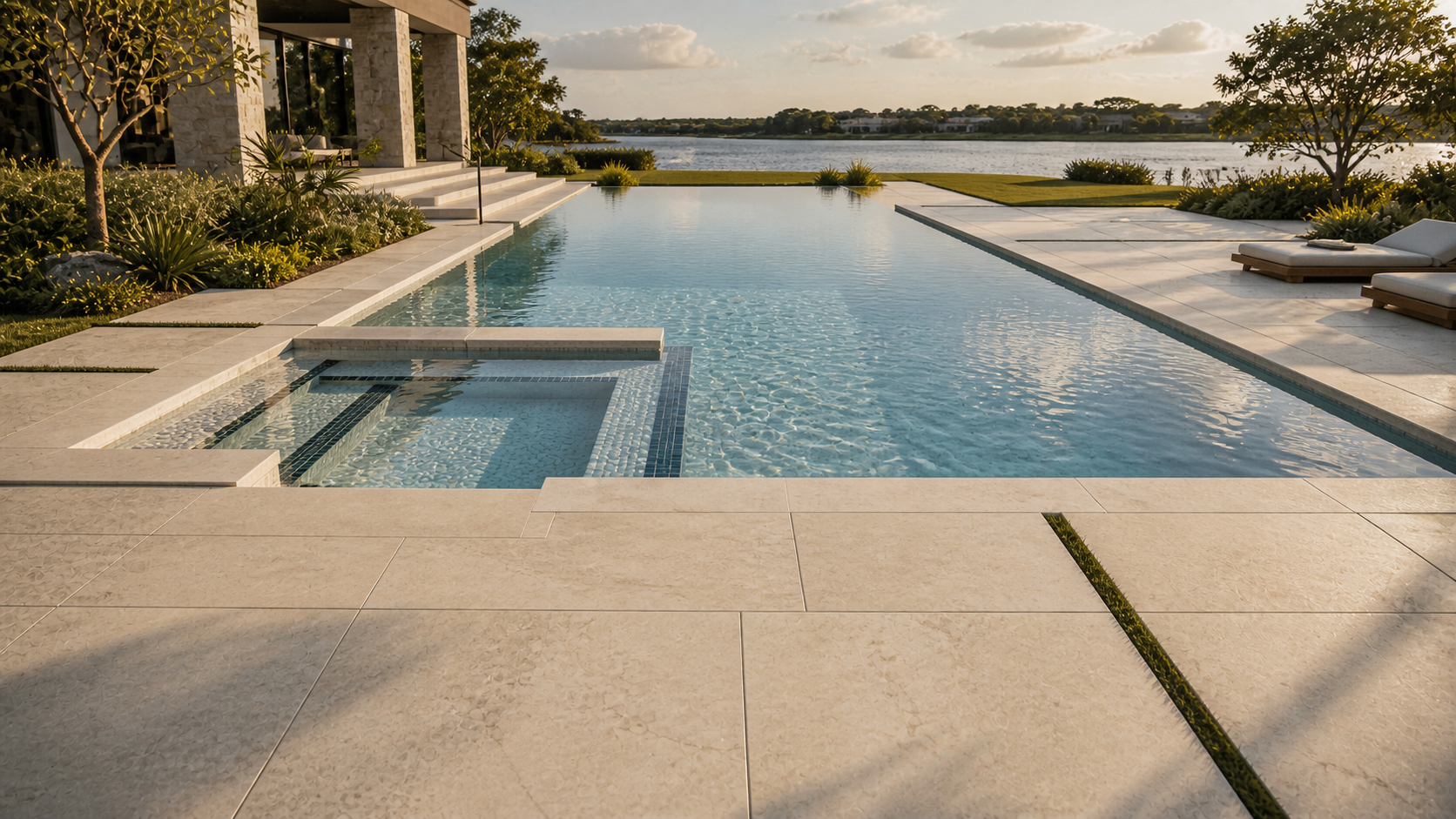
Surface note
Natural stone carries mineral movement and patina. Porcelain offers control and low absorption. The right answer depends on the character you want—and the aging you accept.
Complete palettes
01 / 05
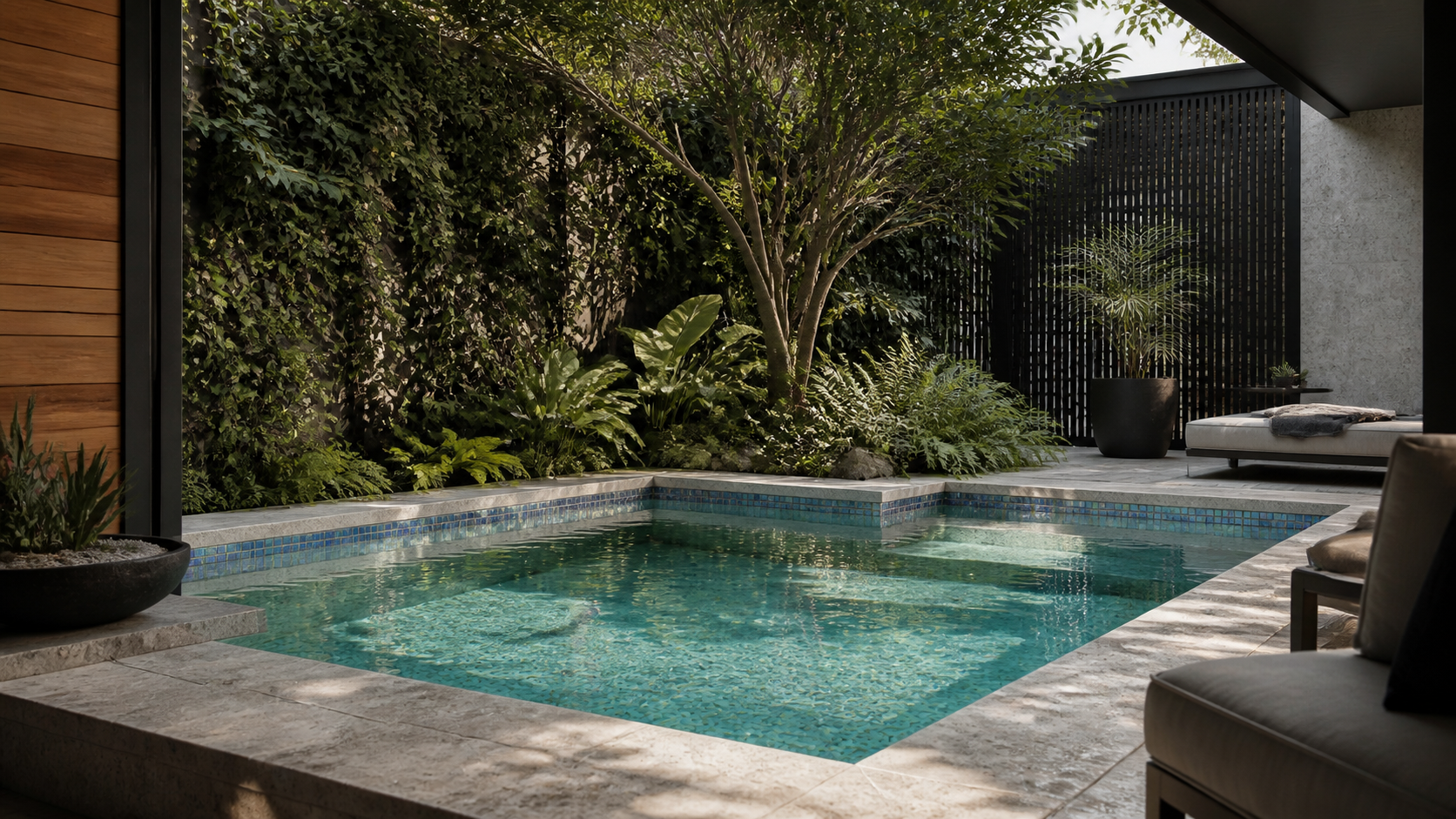
Pale stone extends the architecture while a dark waterline gives the pool a precise outline.
Final selection guide
The best decisions happen with large samples, honest conditions and every transition visible.
Choose the feeling, architecture and landscape relationship before choosing individual samples.
Place full-size samples in direct afternoon sun, then wet them and walk on them barefoot.
Review coping profiles, joints, drains, corners, steps and wall caps—not only broad surface areas.
Natural stone and aggregate vary. Approve the expected range and keep representative control samples.
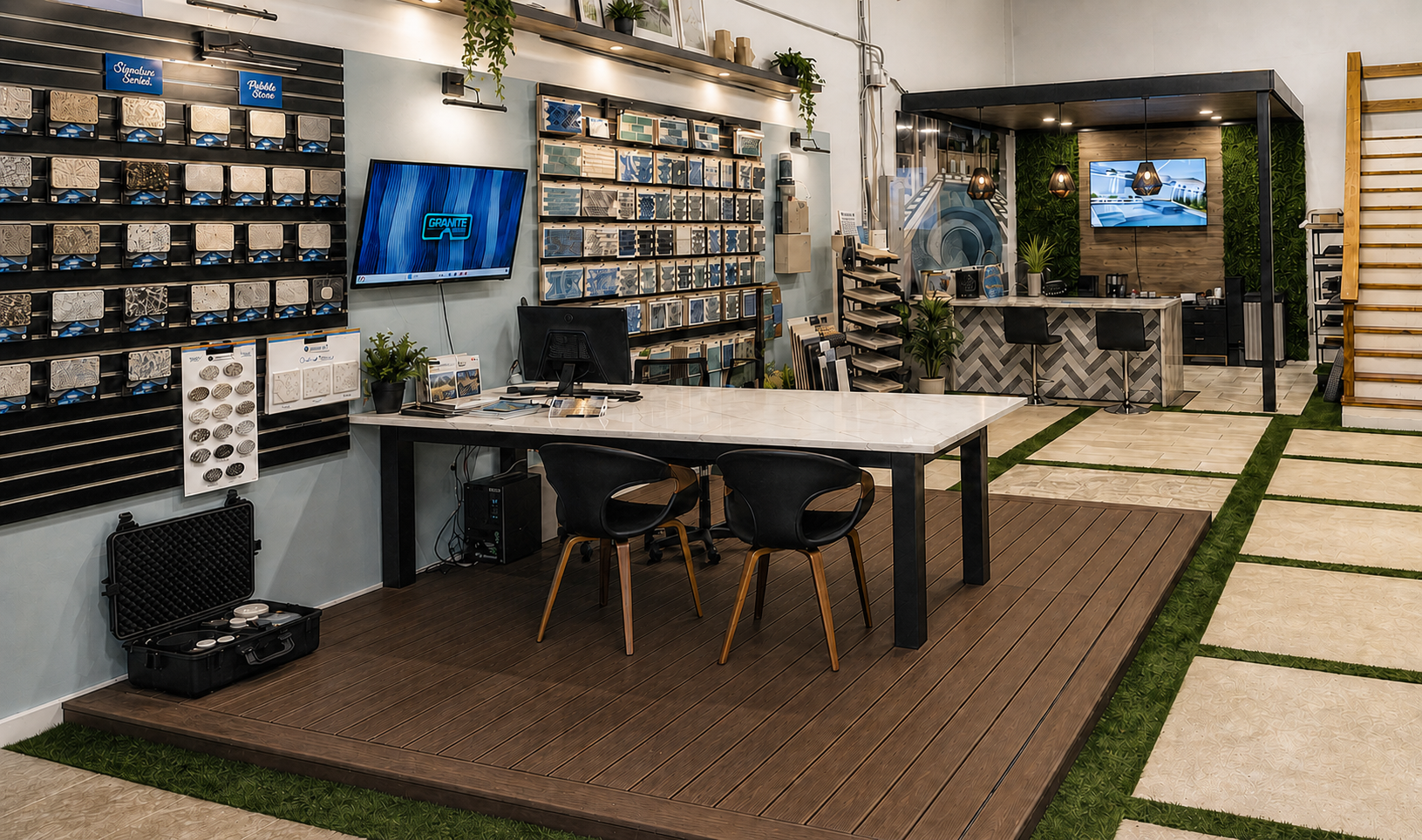
Visit the materials showroom
Photos and samples tell part of the story. Visit the Orlando showroom to compare tile, coping, decking, grout and interior finishes at full scale.